Minister of Domestic Trade and National Market Regulation Meets with the Union of Traders to Strengthen Market Supply and Accelerate the Digitalization of Invoicing and Payments
Minister of Domestic Trade and National Market Regulation Meets with the Union of Traders to Strengthen Market Supply and Accelerate the Digitalization of Invoicing and Payments
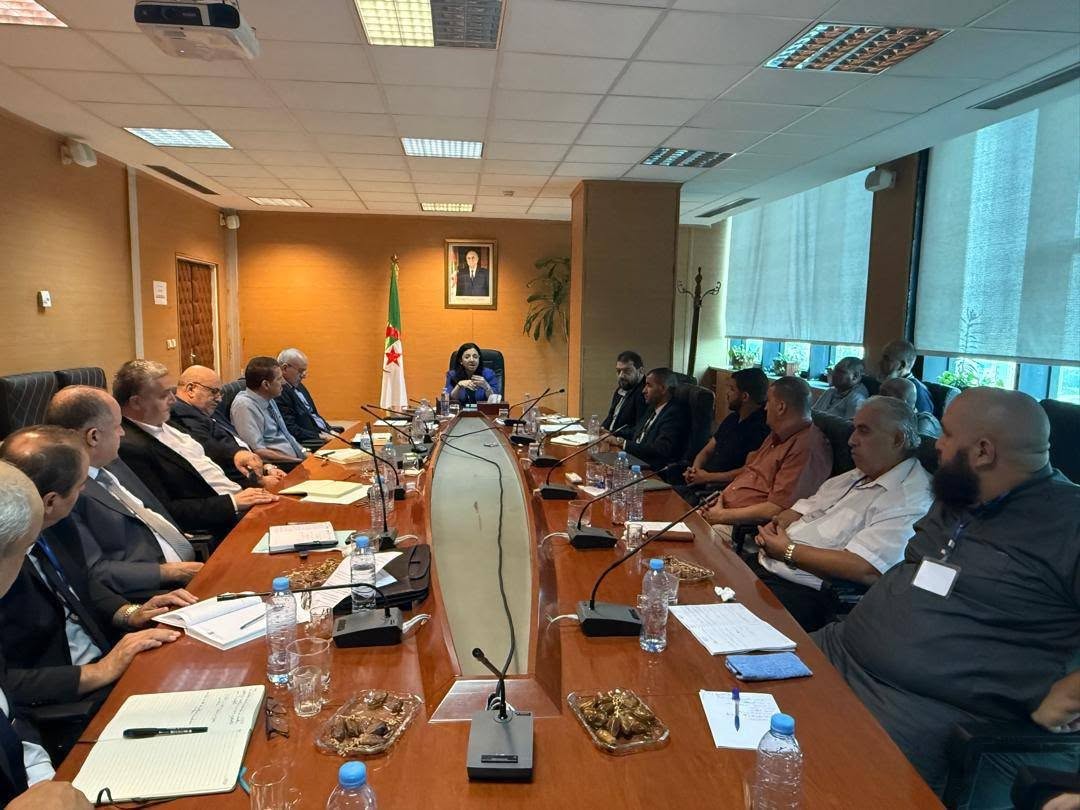
As part of Algeria's national strategy to modernize the commercial sector and ensure the stability of the domestic market, Ms. Amal Abdelatif, Minister of Domestic Trade and National Market Regulation, chaired a high-level coordination meeting with representatives of the General Union of Algerian Traders and Craftsmen (UGCAA).
The meeting brought together senior officials from the Ministry, representatives of several public institutions, including the Directorate General of Taxes (DGT), as well as the Chief Executive Officer of MyTPE.app, Algeria's national digital payment platform specializing in electronic payment solutions and merchant digitalization.
The objective of the meeting was to strengthen coordination between public authorities and economic stakeholders in order to ensure a stable supply of goods across the national market while accelerating the digital transformation of Algeria's commercial ecosystem.
Strengthening the Supply Chain and Ensuring Market Stability
During the discussions, the Minister emphasized that maintaining a well-supplied and balanced national market remains one of the government's strategic priorities. She reaffirmed the importance of continuous collaboration with professional organizations representing traders in order to anticipate market challenges, improve product availability, and maintain commercial stability throughout the country.
Representatives of the General Union of Algerian Traders and Craftsmen presented several recommendations aimed at improving distribution channels, strengthening cooperation between economic operators, and enhancing the efficiency of commercial activities.
Digital Transformation Across the Entire Distribution Chain
A significant part of the meeting focused on the digitalization of the national supply chain.
Participants agreed that the modernization of the Algerian economy requires the implementation of an integrated digital ecosystem connecting every stage of the commercial value chain, including:
Manufacturers and producers; Wholesalers; Regional distributors; Retailers; Final consumers.
Such a digital framework would provide real-time visibility over product flows, improve inventory management, optimize logistics, reduce supply disruptions, and support better decision-making through reliable and timely market data.
Electronic Invoicing: A Cornerstone of Commercial Modernization
Electronic invoicing was identified as one of the key pillars of Algeria's digital transformation strategy.
Participants discussed the importance of implementing secure national solutions enabling businesses to issue, exchange, and archive invoices electronically while ensuring full compliance with regulatory and fiscal requirements.
The deployment of e-invoicing is expected to:
Simplify administrative procedures; Reduce paperwork; Improve the traceability of commercial transactions; Strengthen fiscal transparency; Facilitate tax compliance and auditing; Increase operational efficiency for both businesses and public administrations.
The presence of representatives from the Directorate General of Taxes (DGT) highlighted the government's commitment to developing a national electronic invoicing framework aligned with Algeria's future digital tax administration.
Accelerating Digital Payments Throughout the Commercial Value Chain
Another major topic discussed during the meeting was the expansion of electronic payments beyond consumer transactions to cover the entire commercial ecosystem.
Participants stressed that digital payments should become standard practice across every business relationship, including:
Payments between manufacturers and distributors; Payments between distributors and wholesalers; Payments between wholesalers and retailers; Payments between merchants and final consumers.
This comprehensive approach would significantly reduce reliance on cash transactions while improving financial transparency, accelerating settlements, strengthening accounting processes, enhancing tax traceability, and reducing operational risks.
During the meeting, the CEO of MyTPE.app presented the capabilities of the national payment platform in supporting Algeria's digital transformation through innovative payment technologies such as:
Virtual Point of Sale (SoftPOS); QR Code payments; Payment links; Online payment gateways; Omnichannel payment acceptance solutions.
These technologies are designed to serve businesses of all sizes across multiple sectors, including retail, hospitality, tourism, healthcare, insurance, transportation, and public services.
Building an Integrated Digital Commerce Ecosystem
Participants also discussed the importance of creating a fully integrated digital ecosystem connecting:
Electronic invoicing platforms; Digital payment infrastructures; ERP and business management systems; Inventory and warehouse management solutions; Supply chain monitoring platforms; Government information systems.
Such interoperability would enable seamless data exchange, improve the traceability of commercial operations, strengthen market supervision, and provide policymakers with accurate economic indicators to support informed decision-making.
A Shared Vision for the Future of Algerian Commerce
At the conclusion of the meeting, all participants reaffirmed their commitment to continuing collaboration in support of Algeria's digital transformation agenda.
They emphasized that the successful modernization of the country's commercial sector depends on close cooperation between government institutions, professional organizations, technology providers, financial institutions, and innovative national companies.
The widespread adoption of electronic invoicing, digital payments, and integrated digital commerce solutions represents a strategic opportunity to build a more transparent, efficient, competitive, and resilient economy.
This initiative aligns with Algeria's broader vision of leveraging digital technologies to modernize public services, improve the business environment, strengthen financial inclusion, and accelerate sustainable economic growth.